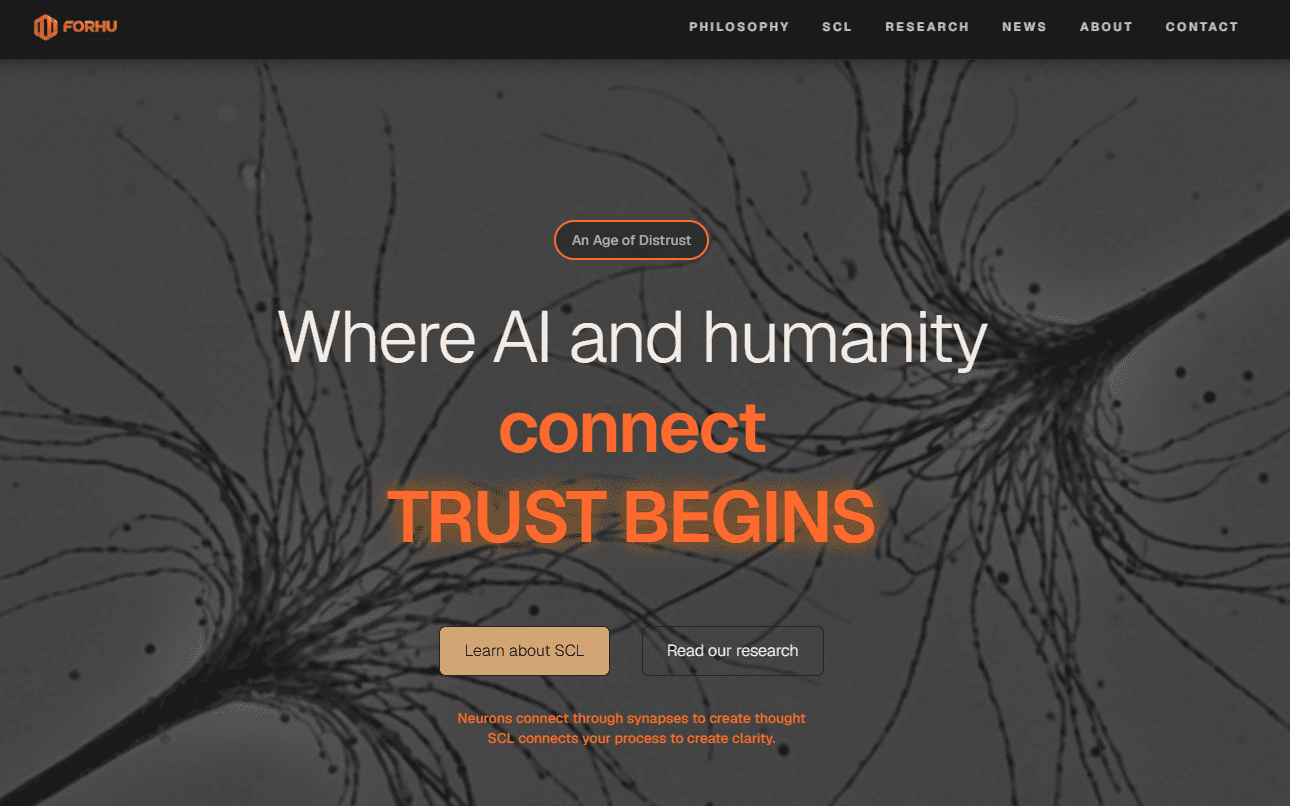
At the VivaTech 2026 event held in Paris, FORHU Inc. boldly addressed the increasing skepticism surrounding artificial intelligence in the enterprise sector. The company unveiled its innovative Structured Cognitive Loop (SCL) architecture, aiming to fulfill the demand for effective governance, accountability, and measurability that has been missing in conventional AI models often characterized as "black boxes."
The SCL architecture serves as a foundational element of FORHU’s approach, which distinctly separates the operational performance of AI from its justification, a necessary differentiation for heavily regulated industries like finance and healthcare. This differentiation is implemented through a comprehensive five-step methodology referred to as the R-CCAM cycle, which stands for Retrieval, Cognition, Control, Action, and Memory.
By establishing this structured cognitive loop, FORHU extends beyond mere predictions by offering an audit trail. This concept of an "epistemic operating system" guarantees that each decision made by AI can be traced and explained, thereby transitioning the conceptual framework from uncritical acceptance to validated intelligence.
In response to one of the significant challenges faced in generative AI—namely, inaccuracies or "hallucinations"—FORHU introduced a practical governance model rather than unattainable promises of flawless accuracy. The company demonstrated the implementation of a proactive "brake" system, which actively eliminates unverified and probabilistic outputs from influencing operations, thus ensuring that the AI technology functions within safe and controlled parameters. Observers noted that this strategy effectively addresses security and integration issues, which frequently hinder the progress of startups within an increasingly stringent regulatory landscape.