In recent years, law firms have increasingly integrated artificial intelligence into their existing practice management systems. However, a select number of platforms are distinguishing themselves by focusing on the entirety of a case rather than simply managing associated documentation.
This transformation becomes evident in the daily operations of legal firms. Many litigators are moving away from the practice of using separate programs for research, document review, and client intake. Instead, they are gravitating towards comprehensive platforms capable of overseeing every aspect of a legal matter, starting from the initial client inquiry to the preparation of evidence for trial.
As the fourth quarter approaches, several noteworthy platforms have emerged.
ilovelawyer
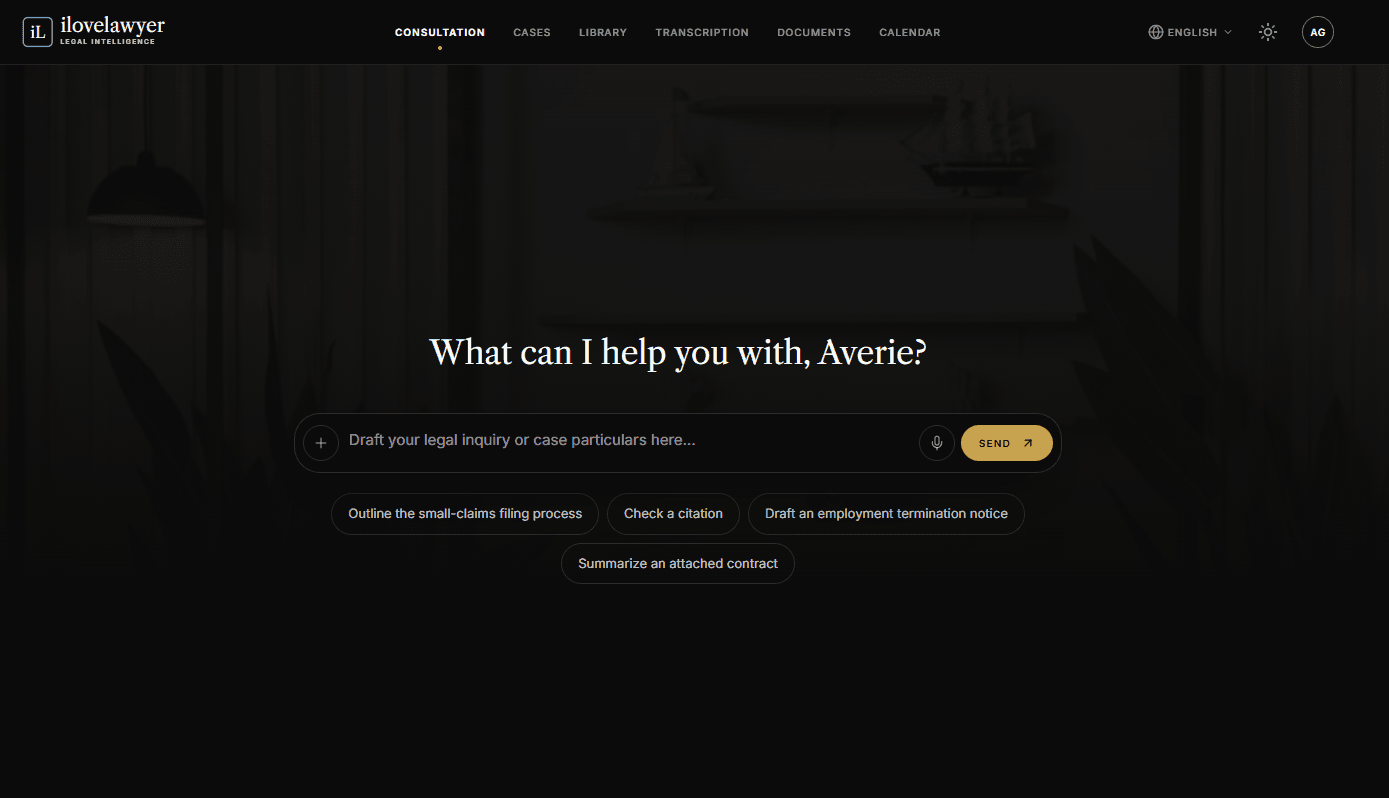
ilovelawyer is characterized by its distinctive features, which become apparent when a lawyer engages with a case file. The platform incorporates a built-in AI assistant that responds to inquiries in real time, complete with citations directly linked to source documents. This reliance on verified sources distinguishes it from other legal AI tools that have faltered in court due to inaccuracies. Users can also attach documents to the chat for the assistant to analyze directly.
Each case is organized into a unique workspace that consolidates various elements—sources, conversations, and generated work products—into a single interface. This system can create a mind map of case issues and claims, construct a chronological timeline, extract factual information from case documents, or generate a downloadable brief summarizing the gathered information. Notably, the platform includes an audio feature that transforms case details into a spoken format, providing a podcast-like overview that's handy for quick pre-hearing reviews.
A remarkable aspect of ilovelawyer is its Legal Terminal, an extensive litigation workspace capable of displaying up to nineteen customizable panes simultaneously, which can be saved and accessed across multiple devices. Within this workspace, several features are available, including a "Red Team" pane that highlights potential arguments from opposing parties, a case reconstruction view that clarifies differing narratives from the client, court, and opponents, and a decisions tracker that records each conclusion made by the AI alongside applicable rules and evidence. Additionally, a contradiction scan examines case materials for inconsistencies, a task typically requiring extensive time investment before deadlines.
Beneath its surface, ilovelawyer houses an extensive library of case law and statutes, all equipped with rigorous citation-checking processes akin to those present in the chat feature. It also incorporates standard case management functions such as document storage, transcription services, and deadline tracking, with capabilities for shared access among team members.
Clio
Clio has maintained a distinct advantage through its scalability. It has become a foundational practice management system for numerous small to mid-sized law firms prior to the advent of the legal AI sector. Its artificial intelligence component, which was initially introduced as Clio Duo and rebranded to Manage AI this year, integrates seamlessly with a firm’s existing Clio records. Unlike a standalone tool, it can generate matter summaries from historical data, assess uploaded documents for key terms and clause language, draft communications for clients, and populate calendars with deadlines extracted from court filings. This model benefits firms by using actual case data, minimizing the need for additional verification. However, its functionality is limited by the quality of data in the Clio system, and it does not cater to deeper litigation strategy needs that some rivals emphasize.
NexLaw (ChronoVault)
ChronoVault, part of NexLaw's offerings which also includes a general AI assistant and a case preparation tool, specifically addresses the challenge of creating a chronology from various case documents. Utilizing natural language processing and optical character recognition, it extracts dates, involved parties, and events from formats such as PDFs, emails, scanned evidence, and witness testimonies. The extracted information is compiled into an easily navigable timeline that can be annotated and exported in a format suitable for court. According to NexLaw, this feature can reduce the time taken to construct a chronology from over one hundred hours to mere minutes—a claim that merits real-world validation. Moreover, the platform ensures zero data retention for enterprise clients, a crucial consideration for firms conscious about protecting privileged information from being processed by external AI systems. However, it is designed as a specialized tool and does not function as a comprehensive case management system.