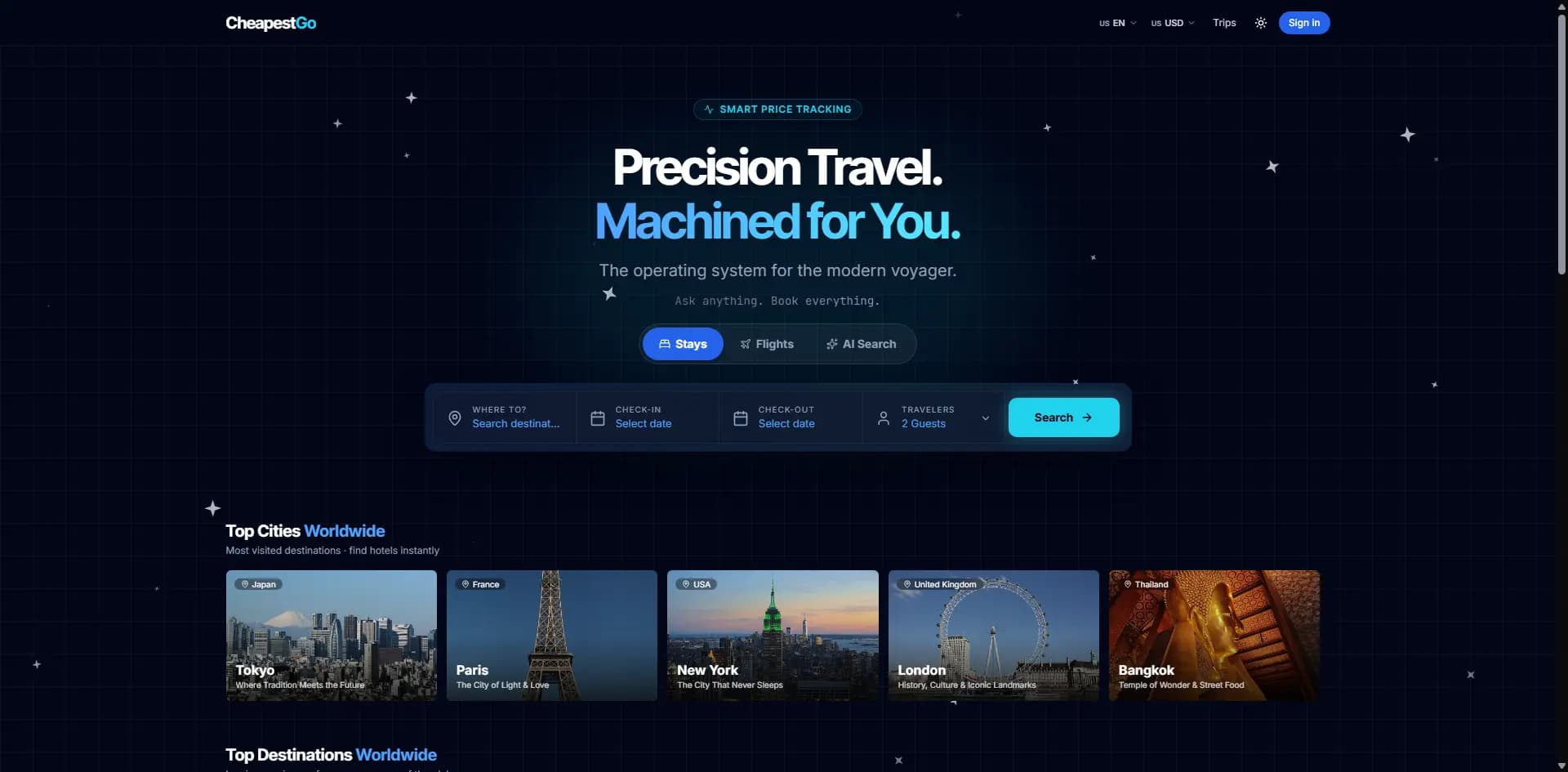
GeomeeGo, a new platform for booking flights and hotels, combines live flight data from Duffel and hotel options from TravelgateX, along with a robust price tracking system that monitors travel routes in real time. The platform's process is straightforward: search, compare, and book, providing instant booking confirmations with secured checkout.
This development raises an important question about the future of travel booking technology.
GeomeeGo is being positioned as a comprehensive operating system for modern travelers, inviting users to "ask anything, book everything." Unlike typical search engines or booking tools, this system is designed to uphold specific goals, gather relevant information, act on the user's behalf, and transparently communicate its proceedings. This represents a significant advancement beyond most existing AI travel solutions, and GeomeeGo aims to achieve these improvements through its Structured Cognitive Loop (SCL).
The existing landscape of AI travel agents currently relies on a singular, extensive language model that manages all aspects of user interaction. This includes understanding requests, maintaining conversation context, determining search requirements, interpreting results, and executing bookings in a continuous text flow.
While this architecture may perform well in controlled demonstrations, it often falters in practical applications. As conversations proceed, crucial details may become obscured. Often, the logic behind decisions may falter, leading to oversights or repetitions. In critical moments, such as when a booking error occurs—such as an incorrect fare class or a booking date that has misaligned—there is typically no clear explanation available. The reliance on vague statements like "the model was mostly correct" is insufficient for financial transactions involving real costs and penalties.
The introduction of SCL promises several transformative changes.
SCL is an advanced cognitive framework that breaks standard functions into individual components, each with precise responsibilities. This includes:
- **Retrieval**: Information is gathered at the beginning of a turn rather than continuously integrated during processing.
- **Cognition**: The language model will suggest actions without the capacity to finalize decisions independently.
- **Control**: Rigorous algorithms assess these suggestions against strict criteria, blocking inappropriate actions before they can be executed.
- **Human Oversight**: For important decisions, a human will validate the judgement at the critical decision-making moment.
- **Action**: Only actions that meet rigorous criteria will be carried out.
- **Memory**: Confirmed facts will be stored, while unverified information will not be retained.
The fundamental principle of this approach is clear: the model is not serving as the agent on its own. Instead, it functions as a decision-support system within a structured loop, emphasizing collaboration rather than merely increasing model size.
Two key implications of this method present significant advantages for travelers.
First, it separates the processes of proposing and handling transactions. Unlike conventional agents, where the process of determining and validating bookings occurs simultaneously, SCL requires that any booking suggestion must first pass a validation checkpoint before proceeding. This means that an agent can recommend rebooking options for an altered travel schedule, but actual booking only occurs after confirmation from the user.
Secondly, the decisions made by the system will be documented throughout the process. Instead of providing a vague post-hoc rationale, the SCL will create a comprehensive log of the decision-making pathway in real time, detailing the evidence used, the rules that were applied, and the final actions taken. This accountability is crucial for travelers, who will have clarity on any decisions made by the AI, greatly distinguishing it from less transparent systems where users might wonder why a certain choice was made. This aspect also serves to align with evolving regulations such as the EU AI Act, promoting transparency that is increasingly essential for both users and partnering agencies.
The structured approach opens up new possibilities for travel planning. Users can specify their desires clearly—such as targeting a specific city, budget, seat preference, or ideal hotel location—while the system actively monitors price changes and evaluates options according to these criteria, surfacing viable choices along the way.